We met with Captain Paul Ha'ake who was doing the inspection of fire codes for the building.
It is 600 sq ft and it can hold 40 people at one time.
Because it can hold 40 people the requirement to have two doors that swing outward is not in place. The two exits are just a plus.
Electrical:
Exit lighting signs must be working for people to see them.

Outlets must be covered.
No obstructions in front of exits or electrical panels.
Electrical panels have a cover and labels match switches.
Storage must be below the sprinklers and sprinklers must be uncovered of tape.
When fire fighters arrive at a scene they shut off the gas and electricity so they can put out the fire.
When the fire alarm is pulled a wet chemical is released from sprinklers above the stove to suffocate the grease fire.
Inspectors check to see if the gas tank or the electrical switch is secure or if anyone can tamper with it.
The color of the bulb on a sprinkler depends on the temperature reading.
There is red, blue, green, purple and black.
The bulb is a cover for the sprinkler, so once it reaches the temperature capacity it breaks and starts to release water.

When fire fighters do a pre-plan they go to a building and walk through and plan out how they would go about putting out the fire.
First they would look for two fire hydrants on the street that they can hook up to.


They plan how many men on the hose line, usually there would be three. One holding the line, one at the nozzle and the Captain in front.

In the building there is a side door from the outside that connects to the kitchen. Amos said that since he knows there's that large door there, he would probably go around to that door and spray the fire in the kitchen from there and work his way in.

Fire fighters not only have to look at where the fire is coming from, but the surroundings to where it could spread to. This particular diner is underneath the Aloha house, so there is an office above and residents behind. The buildings in which the residents live in, the structure integrity is compromised because it is old. They have to think about evacuating these people if need be. The stairs have codes too, for example it can have a minimum slope of x and certain width so people can make their way out of the building.
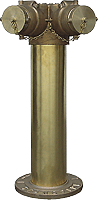
The above picture is of a FDC- Fire Department Connection. A sprinkler valve where the fire fighters plug their hoses into to charge the sprinklers with more water.
The FDC should be 40 ft off the building and the hydrant should be 100 ft from that.
The Control valve system is there in case someone breaks the sprinkler or something else happens. The fire fighters come to the scene and turn off the valve and replace the sprinkler.

When buildings are very close together there must be a fire wall. A fire wall is a wall of concrete that prevents a fire from spreading from one building to another. Fire walls are also supposed to extend past the roof line.
Captain Amos and I also went to the County Building where they hire people for the county.
We met with Geri Onaga who gave me some papers.
One was a formal Maui County Training Announcement for firefighters which explains the duties, the requirements and that there will be a written test and then an agility test.
She also told me about how people apply to become fire fighters. She gave me the form that all Maui County employees fill out which can be found at www.mauicounty.gov/departments/personnel
They also use a website where you can create a candidate profile saying that you are looking for a certain job. https://hi-mauicounty.civicplus.com/jobs.aspx
You sign up for a class online, get a email with a date/time/location and it reminds you two weeks before, one week before and the day before the class.
On Friday I'm going to the Fire Preventions Bureau office to learn more about fire safety.

No comments:
Post a Comment